
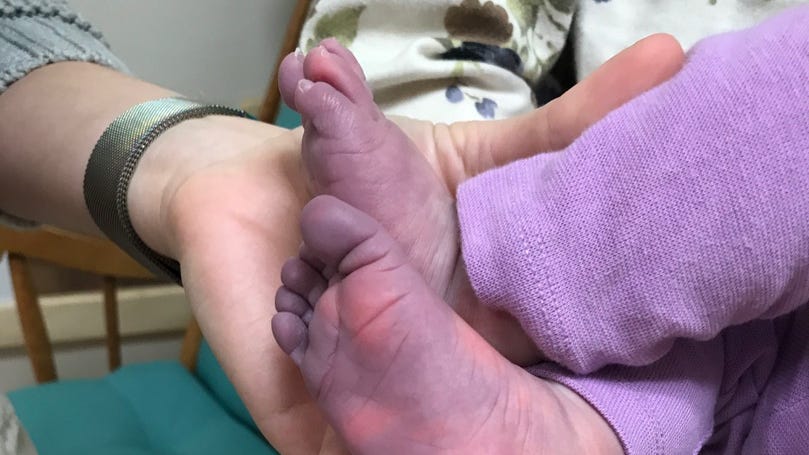
It’s regular for new child child’s leg and toes turning purple together with fingers particularly within the first few weeks of life. This is because of a situation known as acrocyanosis, which happens when the blood vessels within the extremities constrict as a consequence of chilly temperatures or low oxygen ranges. When this occurs, the blood can’t adequately circulate by these areas, and so they flip purple.
Acrocyanosis is normally innocent and resolves itself by itself as infants get older and their circulation improves. Nevertheless, there are some things to remember:
- If the purple discoloration is accompanied by different signs, reminiscent of issue respiratory, lethargy, or poor feeding, it may very well be an indication of a extra critical medical situation and you need to search medical consideration instantly.
- If the purple discoloration is barely on one limb or is accompanied by swelling or ache, it may be an indication of an issue and you need to see a physician.
- In case you are involved about acrocyanosis, speak to your child’s pediatrician. They might help you identify whether it is regular or if there’s something else happening.
Why do child legs, and toes flip purple?
It may be worrying for fogeys to see their child’s leg and toes turning purple. As an professional pediatrician, I’ll talk about the frequent causes behind infants fingers, legs and toes turning into purple:
The medical time period for that is acrocyanosis, which happens when the blood vessels within the extremities of a child constrict as a consequence of chilly temperatures or low oxygen ranges within the air round them. When this occurs, the blood can’t adequately circulate by these areas, and so they flip purple as a substitute.
Mother and father usually discover this occurring extra often throughout the summer season when infants are dressed too warmly or not wrapped tightly sufficient. It additionally tends to happen at evening, as infants might change into chilled whereas sleeping in an unheated room.
Luckily, there isn’t a lot trigger for concern with acrocyanosis, and it normally resolves itself by itself as infants get older and their circulation improves.
How lengthy do new child fingers and toes keep purple?
Newborns usually expertise a hanging change in look when their legs and toes begin turning purple. It’s normal for legs and toes to show purple in infants as much as two weeks previous, but the length of this phenomenon stays unclear.
Generally known as cyanosis, this discoloration of new child limbs is attributed to the child’s circulation system adapting to life exterior the womb. Whereas some infants might have their leg and foot discoloration disappear inside a number of hours or days post-birth, others might discover that it takes a number of weeks earlier than their pores and skin colour returns to its unique hue.
Mother and father must control their child’s pores and skin colour in the event that they discover any adjustments in complexion because of the potential danger of growing jaundice or different medical situations that may very well be critical if left untreated.
Is it regular for new child child’s leg and toes turning purple?
New child infants usually have surprising bodily adjustments, main many dad and mom to fret that their child is experiencing one thing irregular. One concern often arises when a new child’s fingers, legs, or toes flip purple.
Whereas this may be regarding for fogeys, it’s important to know that these discolorations are normally typical and nothing to fret about. This transformation in pores and skin colour is mostly the results of elevated blood circulate attributable to the hotter room temperatures and tight clothes or swaddles infants put on.
This further blood causes the capillaries of their fingers and toes to broaden, exhibiting a purplish hue on their pores and skin. Usually, this discoloration ought to disappear inside a couple of minutes after eradicating any tight clothes or blankets and cooling the room temperature.
Child’s Legs And Ft Turning Purple within the First Days, Weeks, and Months:
In line with the National Library of Medicine, medicines present delicate enchancment, whereas life-style adjustments are the principle type of remedy for managing purple legs and toes (acrocyanosis).
1. First Day:
Throughout the first day after beginning, it’s not unusual for a new child’s legs and toes to exhibit a bluish or purple tint. This may be attributed to the physiological adjustment of the circulatory system because the child transitions from the womb to the exterior surroundings.
2. First Week:
Within the preliminary week of life, acrocyanosis, the short-term bluish discoloration of extremities, should still be noticeable. This phenomenon is commonly a results of the new child’s circulatory system persevering with to adapt to the extrauterine surroundings. Most circumstances of acrocyanosis throughout this era are benign and self-resolving.
3. Two Weeks:
Across the second week, a child’s legs and toes should still exhibit a bluish or purple tint. This may be attributed to a traditional developmental course of known as acrocyanosis. Throughout acrocyanosis, the child’s circulatory system remains to be adjusting to the skin surroundings, and the short-term discoloration is a results of the blood circulation adapting to the brand new situations.
4. Three Weeks:
Within the third week, it’s frequent for acrocyanosis to persist to some extent. The child’s circulatory system continues to mature, and the small blood vessels within the extremities should still be adjusting. Whereas the depth of the discoloration might fluctuate, gradual enchancment is often noticed throughout this era.
5. First Month and Past:
Because the weeks progress into the 5 month, the depth of acrocyanosis sometimes diminishes. The child’s circulatory system matures, and the physique turns into more proficient at regulating blood circulate. It’s frequent for the bluish or purple hue to regularly fade, and by the tip of the primary month, many infants exhibit regular pores and skin coloration.
- 4 months: Purple discoloration in a 4-month-old’s toes could also be regular (acrocyanosis), however persistent considerations require analysis by a pediatrician.
- 8 months:Your 8-month-old’s purple toes are probably as a consequence of acrocyanosis, a standard and benign situation associated to short-term circulatory changes. Seek the advice of your pediatrician for reassurance and steerage if wanted.
What if purple fingers, legs, and toes flip blue?
What if purple fingers, legs, and toes flip blue? It’s an odd phenomenon reported by some people in recent times. Whereas it’s not a standard incidence, it may nonetheless be a scary expertise while you’re the one experiencing it.
If you end up on this state of affairs, there are a number of attainable causes for why your pores and skin may need modified colours. It may very well be as a consequence of an allergic response or a medical situation like Raynaud’s illness. Medicines like steroids or antibiotics may quickly trigger your pores and skin to vary colour.
A very powerful factor to do is go to your physician instantly to allow them to correctly diagnose the reason for the colour change and supply acceptable remedy choices. This may assist be certain that you get again on monitor towards well being and wellness with minimal disruption to your life!
Child’s fingers and toes flip purple after the tub:
On the subject of youngsters, dad and mom usually fear about the commonest and unusual well being points that will come up. Certainly one of these extra unusual issues is when a baby’s fingers and toes flip purple after a shower. This situation can fear any dad or mum, as they could not know what’s inflicting the colour change or if this might point out an underlying medical challenge.
This situation happens as a consequence of sudden publicity to chilly water, which causes the blood vessels to constrict, resulting in decreased circulation within the extremities, such because the fingers and toes.
This sudden publicity may cause a bluish or purplish discoloration on legs, arms, or different physique elements, which ought to resolve after a while when heat blood circulate returns. In some circumstances, nevertheless, it could take longer for regular pores and skin coloration to return, and if this persists, then medical consideration must be sought instantly.
What if the child’s legs flip purple when crying?
A child’s cries are anticipated to be accompanied by loud wails, crimson cheeks, and tear-soaked eyes. However what if the child’s legs or toes have been turning purple? Whereas many dad and mom might discover this alarming, it’s important to know that it may very well be fully benign.
Legs and toes turning purple when crying can happen in wholesome infants and people with underlying medical situations. This phenomenon is called ‘acrocyanosis,’ which happens when there’s a lower in blood circulation to the extremities as a consequence of chilly temperatures or stress. It normally presents as a blue-purple discoloration of the legs and arms, though some infants may additionally expertise this on their face or chest.
What if the child’s legs flip purple within the provider?
Suppose you’ve seen your child’s legs and toes hanging purple whereas on the web page; it’s possible you’ll surprise what’s occurring. It may very well be one thing so simple as a innocent circulation challenge or one thing extra critical. Regardless of the trigger, it’s important to take motion and perceive why that is occurring so that you could guarantee your child stays secure and wholesome.
There are a number of potential causes your toddler’s legs and toes are turning purple within the provider. Some of the frequent causes is solely poor circulation as a consequence of a good match. Tightly wrapping your child too snugly can prohibit blood circulate and trigger their extremities to show purple or blue. Moreover, if there’s a lower in physique temperature, infants might expertise poor circulation, resulting in discoloration of their limbs.
Child’s legs flip purple when held:
It’s an alarming sight: their legs and toes immediately flip purple when a child is held. Mother and father might surprise what’s inflicting this discoloration and if it’s trigger for medical concern. Child’s legs turning purple can have a number of causes, however mostly happens because of the child pooling blood within the decrease extremities. This occurs when a child’s circulation will get blocked off, which might happen as a consequence of many issues, reminiscent of a good diaper or an excessive amount of time spent on their again with their legs prolonged.
It’s commonest after consuming or crying, the place stress on the stomach pushes blood down into the toes and fingers. Luckily, it’s normally innocent, though some medical situations like Raynaud’s syndrome or acrocyanosis may be chargeable for this symptom.
In case your child has a purple space on their foot or leg, it may concern dad and mom. Leg and toes turning purple is a symptom of many medical situations starting from minor points to critical well being issues. Mother and father must know what causes their child’s legs and toes to show purple to allow them to search correct remedy.
The commonest reason for purple spots on the legs or toes is bruising. Infants are notably liable to bruising as a result of they’re extra lively than ever, usually main them into contact with objects that end in bruises and scrapes.
If the bruise just isn’t extreme, it ought to fade over time with none medical remedy obligatory; nevertheless, if it begins to look worse or doesn’t heal correctly, you need to converse together with your pediatrician about additional remedy choices.
Particular well being elements that trigger acrocyanosis in infants
Acrocyanosis in infants outcomes from a mix of things associated to their early physiological improvement. The immature circulatory system of newborns, nonetheless adapting to the transition from the womb to the exterior surroundings, can contribute to short-term discoloration of the extremities. Restricted oxygenation within the preliminary days or perhaps weeks of life, in addition to peripheral vasoconstriction in response to elements like chilly or stress, may additionally play a task. Moreover, hormonal influences throughout beginning and the postnatal interval can influence the child’s circulatory system. Whereas acrocyanosis is mostly thought-about a traditional and innocent situation, dad and mom ought to seek the advice of a healthcare skilled if considerations come up or if the bluish discoloration persists, guaranteeing an intensive analysis and acceptable steerage for the child’s well-being.
Conclusion:
Mother and father should know the indicators and signs of a circulation drawback in infants, reminiscent of child’s legs and toes turning purple. It’s essential to watch their child’s toes and get in touch with a pediatrician if any discoloration is seen. Taking precautions, like maintaining the child’s toes elevated and guaranteeing socks match appropriately, may assist.
FAQ’s
Q1: When does acrocyanosis sometimes happen in newborns?
Acrocyanosis usually seems inside the first few days of life and tends to resolve by itself as your child’s circulatory system matures.
Q2: Is acrocyanosis a trigger for concern?
Typically not. Acrocyanosis is a traditional response to the adjustment of your child’s circulatory system and normally poses no well being dangers.
Q3: How can I differentiate between acrocyanosis and a extra critical situation?
Acrocyanosis is distinguished by its symmetrical look and resolves with warming. Seek the advice of your pediatrician in case you have considerations or discover different signs.
This fall: Can I do something to alleviate acrocyanosis in my child?
Retaining your child heat, particularly in cooler environments, might help. Nevertheless, at all times seek the advice of your pediatrician for customized recommendation.
Q5: When ought to I search medical consideration for purple discoloration?
If discoloration persists, spreads erratically, or is accompanied by different regarding signs, seek the advice of your pediatrician promptly for an intensive analysis.
Learn extra: Why Do Newborn Eyes Get Crusty? (What’s Normal & What’s Not)